

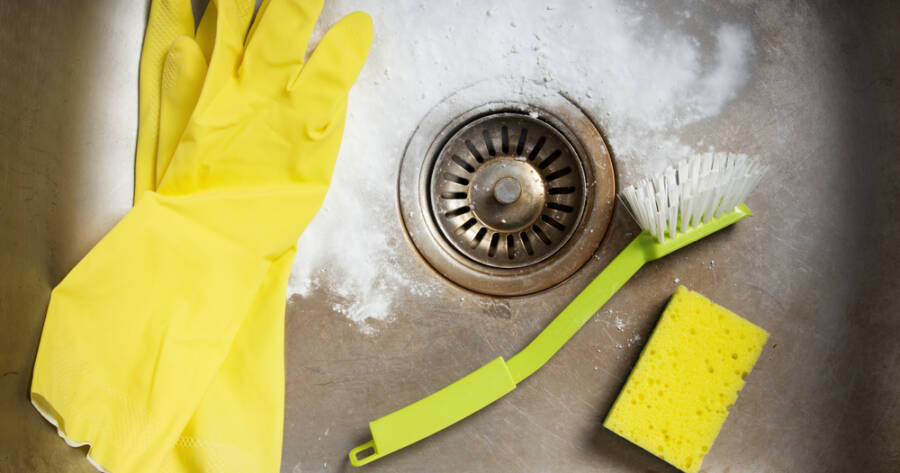
Powder drain cleaners can be effective against stubborn clogs, but their strong chemical formulas require careful handling. Understanding how key products react with water, which safety precautions to take, and why label directions matter can help reduce the risk of burns, splashes, pipe damage, and dangerous chemical reactions while improving the chances of clearing a blocked drain safely.
What Makes Powder Drain Cleaners Effective
Powder drain cleaners rely on a combination of aggressive chemical ingredients to break down clogs. Many powder and crystal drain cleaners rely on strongly caustic ingredients such as sodium hydroxide, although formulations vary by product; some drain openers may also contain potassium hydroxide (source). When these components come into contact with water inside the drain, they produce heat as a byproduct of the chemical reaction. This heat generation is not accidental — it actively helps melt grease and other oily substances that are blocking the pipe (source).
The gas produced during the reaction also contributes to the cleaner’s ability to dislodge debris. Because sodium hydroxide releases substantial heat when mixed with water and can react with certain metals, users should check the product label carefully for plumbing restrictions; some crystal drain cleaners specifically warn against use with aluminum, lead, zinc, or galvanized pipes (source). Understanding this balance between effectiveness and pipe safety is an important part of using powder drain cleaners responsibly.
How to Use Powder Drain Cleaners Correctly
Proper application technique plays a significant role in whether a powder drain cleaner works as intended. Because sodium hydroxide and similar compounds are hygroscopic — meaning they absorb moisture from the surrounding environment — placement matters. Sodium hydroxide readily absorbs moisture from the air and releases substantial heat when mixed with water, making it important to keep powder products dry until use and to follow the manufacturer’s application directions exactly (source). Pouring the product as close to the drain opening as possible, directing it toward the clog rather than spreading it across a wet surface, helps maximize its effectiveness.
When dispensing the product, keeping the pouring point close to the drain minimizes the chance of splashing (source). Splashing is a real concern given the concentrated nature of these chemicals, and a controlled pour is a straightforward step that significantly reduces exposure risk. Following the manufacturer’s instructions about water volume and wait time also ensures the chemical reaction proceeds properly without leaving residue that could interact with other cleaning products used later.
Safety Gear and Protective Precautions
Because powder drain cleaners contain high concentrations of powerful chemicals, they carry meaningful risk when used without proper protection (source). Before handling any powder drain cleaner, wearing rubber gloves and protective goggles is strongly recommended. These two items alone can prevent the most common types of accidental exposure — skin contact and eye splashes — that occur during routine use.
Ventilation is another factor worth considering. The heat-producing reaction inside the drain can release fumes, and working in a well-ventilated space reduces the chance of inhaling anything harmful. Drain cleaners contain chemicals that can be harmful whether they are swallowed, inhaled, or come into contact with skin or eyes (source). Even short-term inhalation of fumes in a confined, poorly ventilated area can cause irritation, so opening a window or running a bathroom fan before and during use is a practical precaution.
What to Do If Accidental Exposure Occurs
Despite careful handling, accidents can happen. Knowing how to respond quickly makes a significant difference in reducing harm. If the chemical contacts skin or eyes, the appropriate immediate response is to flush the affected area with a large volume of water — at least two quarts — for a minimum of fifteen minutes (source). Delaying this step or using too little water can allow the chemical to continue causing damage.
Ingestion is a more serious emergency. Damage from swallowed sodium hydroxide can continue affecting the esophagus and stomach for weeks after the initial exposure, even if symptoms seem mild at first (source). Anyone in the United States who suspects accidental ingestion or a serious exposure should contact the Poison Help hotline at 1-800-222-1222, which connects callers to local poison control specialists (source).
Mixing drain cleaners with other household products is another hazard that deserves attention. Never combine a powder drain cleaner with another drain-opening product or household cleaning chemical, because incompatible products can react and release hazardous gases or cause dangerous splashing (source). Allowing adequate time for the drain to clear and flush thoroughly before introducing any additional product is essential for avoiding dangerous chemical interactions.
Storing Powder Drain Cleaners Safely
Storage practices are just as important as proper application. Since these products are hygroscopic, moisture exposure during storage can degrade the formula or cause premature reactions. Keeping containers tightly sealed in a cool, dry location away from other household chemicals reduces both product degradation and the risk of accidental contact. Storing them out of reach of children and pets is a basic but critical safeguard given how hazardous these substances can be upon exposure.
Labeling matters too. Transferring powder drain cleaners into unmarked containers — even temporarily — creates confusion that can lead to accidental misuse. Keeping the product in its original packaging ensures that hazard warnings, ingredient information, and first aid instructions remain accessible whenever they are needed most.
Why You Should Learn More About Powder Drain Cleaners
Powder drain cleaners are among the more potent tools available for household drain maintenance. Their effectiveness stems directly from the reactive chemistry that also makes them hazardous if handled carelessly. Wearing protective gear, positioning the product carefully near the drain, ensuring adequate ventilation, and knowing how to respond to accidental exposure are all practical steps that protect both the user and the plumbing system.
Being informed about what these products contain and how they behave chemically turns a potentially risky task into a manageable one. For anyone dealing with persistent clogs, taking time to understand proper usage and safety practices is a worthwhile investment that supports both effective results and personal wellbeing.