

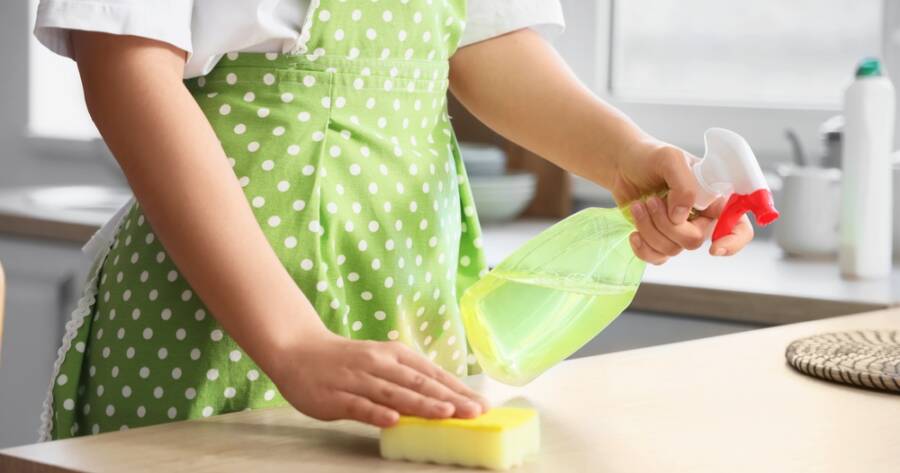
Coffee rings, grease splatters, sauce spills, and stubborn discoloration can make even a well-kept kitchen look neglected. The challenge is that the safest stain-removal method depends heavily on the surface underneath. A treatment that works on laminate may damage marble or granite, so identifying both the stain and the countertop material should always come before scrubbing.
Start by Identifying the Countertop Material
Before treating a stain, determine whether the surface is laminate, quartz, granite, marble, butcher block, tile, or another material. Countertops vary considerably in porosity, stain resistance, and tolerance for acids or abrasive cleaners.
Natural stone requires particular care. Mild dishwashing detergent and warm water are generally appropriate for routine stone cleaning, while products containing vinegar, lemon, or other acids can damage acid-sensitive materials, particularly marble (source). Even granite should not automatically be treated with vinegar because its mineral composition and any applied sealer can affect how it reacts.
Starting gently is usually preferable to immediately reaching for bleach, abrasive powder, or a strong commercial cleaner.
Treat Granite and Marble Stains Carefully
For granite, begin with warm water, mild dishwashing liquid, and a nonabrasive cloth or sponge. Acidic cleaners, including vinegar, should be avoided because they may harm the stone or its finish (source).
Marble demands even more caution. Coffee, red wine, and similar spills should be blotted quickly rather than wiped across the surface. If an organic stain has already penetrated natural stone, hydrogen peroxide may be appropriate in certain circumstances, while oil-based stains can require a cleaner capable of dissolving the oil (source). Because stone treatments vary with both the material and the stain, test any treatment in an inconspicuous area first.
It is also important to distinguish staining from etching. Acidic substances such as citrus juice or vinegar can chemically alter the finish of marble. Cleaning may remove the residue, but restoring an etched surface can require polishing rather than ordinary stain removal.
Use Baking Soda on Laminate, Not Every Surface
Baking soda is frequently presented as a universal kitchen remedy, but it is better used selectively. On laminate countertops, a paste of baking soda and water can help lift a stain. The mixture should be placed over the affected area for about five minutes and then wiped away rather than aggressively scrubbed, since the paste itself is mildly abrasive (source).
Bleach is not a good substitute on laminate. Strong chemical cleaners can abrade or permanently discolor the finish, so mild dishwashing liquid should remain the first choice for everyday cleaning.
Quartz needs a different approach. Routine messes can usually be removed with a damp cloth and a mild, nonabrasive cleaner. For more persistent food staining, one tested approach uses a paste containing hydrogen peroxide, flour, and water that is allowed to dry beneath plastic before being removed with warm water and a soft cloth (source).
Remove Butcher Block Stains Without Ruining the Wood
Butcher block can absorb spills, particularly when it has an oil finish, so prompt cleanup matters. For ordinary staining on oiled butcher block, salt can be worked gently over the affected area with a damp sponge or paper towel. More stubborn discoloration may require fine-grit sandpaper followed by fresh oil on the treated section (source).
Sanding should follow the grain so the wood fibers are not unnecessarily damaged. If a larger portion of the countertop needs restoration, sanding can remove discolored surface wood before a food-safe oil or oil-and-wax finish is reapplied (source).
Finish type matters here as well. An oiled butcher block should normally be re-oiled after treatment, while varnished wood may require sanding and refinishing if a stain or scratch penetrates its protective coating.
Handle Grout and Tile Stains Separately
Ceramic and porcelain tile resist many everyday kitchen stains well, but grout is considerably more vulnerable to discoloration and mildew.
For stained grout, diluted bleach can be applied with a toothbrush and scrubbed into the affected lines. Ceramic tile itself may require different treatments depending on the stain. Baking soda and water can be used for oil-based staining, hydrogen peroxide for coffee, tea, or juice, and properly diluted bleach for certain ink or dye stains (source).
Never assume that because a cleaner is safe for grout it is also appropriate for every nearby surface. Rinse treated areas thoroughly and follow the countertop or tile manufacturer’s instructions whenever they differ from general cleaning guidance.
Act Quickly and Match the Treatment to the Stain
Successful kitchen stain removal is less about finding one miracle cleaner and more about choosing the right treatment for the material. Granite and marble require cautious, non-acidic care, laminate can respond well to baking soda paste, quartz has its own stain treatments, butcher block may need sanding and re-oiling, and grout can tolerate methods that would damage other surfaces.
Cleaning spills promptly also reduces the chance that they will penetrate, dry, or become harder to remove. With the countertop material identified first and aggressive cleaners reserved for surfaces that can safely tolerate them, most common kitchen stains can be addressed without turning a small mark into permanent surface damage.