

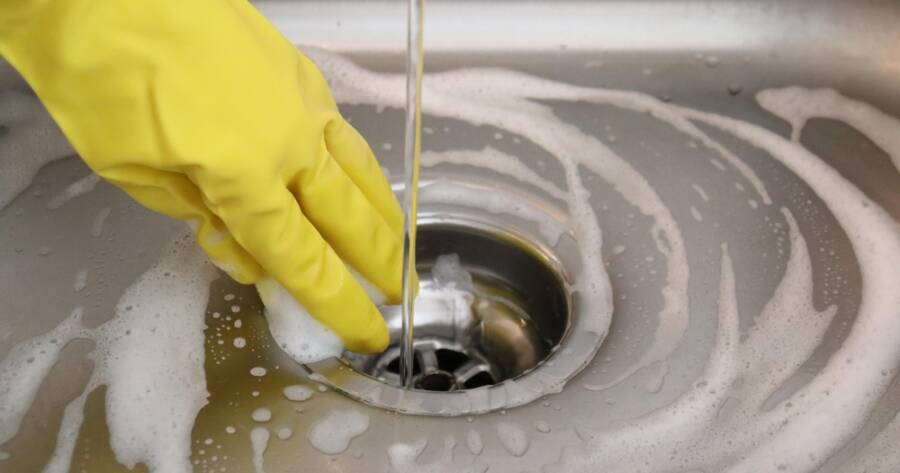
Powder and crystal drain cleaners can break through stubborn grease and organic buildup, but their strength also makes them easy to misuse. Many contain highly corrosive chemicals and can generate significant heat during use. Knowing when drain cleaning products are appropriate, how directions can differ between formulas, and which safety precautions matter most can help reduce unnecessary risk.
How Powder Drain Cleaners Work
Many non-enzymatic drain cleaners rely on strong alkaline chemicals such as sodium hydroxide or potassium hydroxide to attack greasy and organic material inside a clogged drain. Some formulas also generate heat when activated, which can help soften oils and other substances contributing to a blockage. Because these chemicals are highly concentrated, improper handling can cause serious burns or other injuries (source).
Not every powder or crystal cleaner uses the same formulation. Zep, for example, describes one of its crystal drain openers as an alkaline product that releases heat when water is added, while Roebic identifies sodium hydroxide as the active caustic ingredient in its crystal formula (source, source). Because formulas differ, instructions for one product should never be assumed to apply to another.
Follow the Instructions for the Specific Product
There is no single set of directions that works for every powder drain cleaner. The amount of product, water temperature, waiting period, and flushing method can vary considerably by brand. Drano Kitchen Granules, for example, calls for hot but not boiling water, while other crystal formulas specifically require cold water to control the amount of heat generated during use (source, source).
For that reason, the product label should always take priority over generic online instructions. Using more than the recommended amount is not necessarily more effective and may create additional problems. Drano warns that exceeding the stated dosage can contribute to stagnation or even permanent pipe blockage, while manufacturers commonly recommend contacting a plumber if the product does not clear the drain after the permitted number of applications (source).
Protect Yourself and Never Mix Drain Cleaners
Drain cleaners containing sodium or potassium hydroxide can cause painful chemical burns if they contact the skin or eyes. Poison Control recommends wearing goggles and rubber gloves, pouring the cleaner carefully near the drain to reduce splashing, and keeping the container securely stored away from children (source). Users should also follow any additional protective or ventilation instructions printed on the individual product label.
Different cleaning chemicals should never be mixed. Roebic warns that combining its crystal cleaner with acids, ammonia, or other drain products can cause hazardous splashing or gas release, while Drano advises against using its granules if another product was recently applied to the same clog (source, source). If the first treatment fails, experimenting with additional chemicals is not a safe substitute for professional plumbing help.
Check the Fixture, Plumbing, and Septic System First
Powder drain cleaners are not suitable for every drain. Restrictions vary by formula, but some products should not be used in toilets, garbage disposals, tubs, showers, or plumbing made from particular metals. Drano Kitchen Granules, for example, is intended for kitchen drains without garbage disposals and carries several fixture and surface restrictions (source). Checking the label before use is essential because compatibility depends on the specific product and plumbing system.
Homes with septic systems require additional caution. The Environmental Protection Agency advises homeowners to avoid chemical drain openers for clogged drains and recommends mechanical alternatives such as a drain snake instead. Septic systems rely on microorganisms to break down waste, and strong chemicals can interfere with that process or damage parts of the system (source).
Know When to Stop and Call a Plumber
Once a chemical drain cleaner has been applied, users should be particularly cautious about trying mechanical methods. Drano specifically warns against using a plunger with its granule formula because corrosive cleaner may remain in the drain and splash back toward the user (source). Persistent clogs can also indicate a problem deeper in the plumbing system that chemical cleaners are unlikely to solve.
Exposure to the cleaner itself also requires immediate attention. Poison Control warns that corrosive drain cleaners can cause severe burns and permanent tissue damage if swallowed or splashed onto the skin or into the eyes. In the United States, anyone with a suspected exposure can contact Poison Control at 1-800-222-1222 or use its online assistance service for guidance (source).
Using Powder Drain Cleaners More Safely
Powder and crystal drain cleaners can be useful against certain stubborn clogs, particularly when the product is designed for the type of buildup involved. Their effectiveness, however, comes from highly reactive chemicals that require careful handling. Reading the label, using the specified amount and water temperature, wearing appropriate protection, and avoiding incompatible fixtures or chemicals are all essential precautions.
A drain that remains blocked after the manufacturer’s recommended treatments may require mechanical cleaning or professional attention instead. Chemical cleaners should not become a cycle of repeated applications or mixed products. Knowing when a powder cleaner is appropriate, and when it is time to stop using one, is just as important as understanding how the product works.