

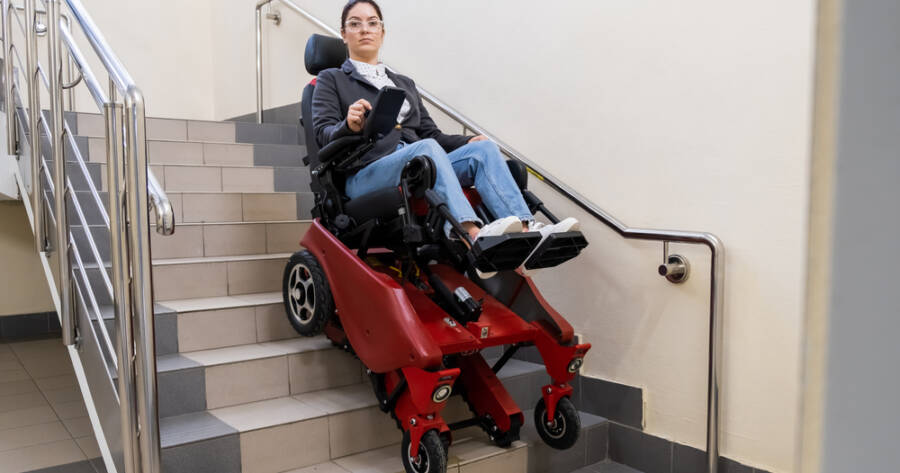
For older adults and people with mobility challenges, navigating stairs safely can be a daily concern. Mobile stair lifts offer a practical, flexible solution — but understanding exactly how they work helps families and caregivers make confident decisions about mobility support.
What Is a Mobile Stair Lift?
A mobile stair lift, sometimes called a portable stair lift, is a battery-powered device designed to transport a person safely up and down stairs without any permanent installation. Unlike traditional stair lifts that require a fixed rail system mounted to a wall or staircase, mobile versions are freestanding and can be relocated as needed. This fundamental difference makes them a versatile choice for a wide range of living situations, including multi-story homes, rental properties, and even outdoor staircases.
The device typically consists of a motorized base, a padded seat or transport platform, and a set of controls operated by a caregiver or, in some configurations, the user themselves (source). Rather than gliding along a rail attached to the wall, the unit moves directly along the surface of the staircase steps, using specialized wheels or tracks to maintain secure contact with each stair.
The Mechanical System: Tracks, Motors, and Grip
The engineering behind mobile stair lifts centers on three core systems working together: motorized propulsion, a traction-based contact system, and built-in stabilization technology.
Portable stair lifts are equipped with motors that power the climbing mechanism, driving the tracks to enable smooth ascent or descent of stairs (source). These motors are typically electric and draw power from a rechargeable battery pack housed within the unit. This eliminates the need for any wall outlet or power cord during operation, which is a key factor in the device’s portability.
The traction system is what allows a mobile stair lift to grip each step securely. Portable stair lifts often feature a tracked system where tracks or treads are fitted to the wheels, providing traction and grip that allows the device to secure itself to each step during ascent or descent (source). Many models also incorporate rubberized materials along the contact surfaces to further reduce the risk of slippage on various stair materials, whether carpeted, tiled, or hardwood (source).
Advanced balancing and stabilizing technology is built into portable stair lifts to ensure stability and minimize the risk of tipping during stair climbing (source). This internal stabilization system continuously compensates for the angle of the staircase and the weight distribution of the user, keeping the device level and controlled throughout the entire trip.
Controls and Operation
Operating a mobile stair lift is designed to be straightforward. A caregiver uses simple controls like a joystick or push buttons to manage movement, allowing them to start, stop, and adjust the pace of travel at any point on the staircase (source). This caregiver-operated design keeps the individual being transported in a passive, seated position throughout the journey, reducing any physical effort on their part and minimizing the potential for accidents.
Mobile stairlifts are portable, battery-powered devices that use motorized tracks to make going up and down stairs quick, easy, and safe — requiring no permanent installation (source). Because no installation is involved, the device can be deployed or stored in minutes, making it practical for both everyday use and occasional needs.
Battery Life and Carrying Capacity
One of the most important practical considerations for any mobile stair lift is how far it can travel on a single charge and how much weight it can safely support. Different models offer varying capabilities to suit different users and living arrangements.
Some lightweight models, such as the LITE Mobile Stairlift, support users up to 250 pounds and can handle as many as 60 flights of stairs before requiring a recharge (source). On the higher end, heavy-duty options like the Genesis Mobile Stairlift can carry individuals up to 400 pounds across as many as 120 flights on a single battery charge (source). These performance figures indicate that most users in a typical residential setting can rely on their device for extended periods between charges.
Staircase Compatibility and Portability
A common misconception about mobile stair lifts is that they are limited to simple, straight staircases. In reality, unlike traditional stairlifts fixed to a single location, portable stair lifts are foldable and can handle straight, curved, and even spiral staircases both indoors and outdoors (source). This compatibility with multiple staircase types dramatically broadens the situations in which a mobile unit can be used effectively.
Specialized models have been engineered specifically for complex staircase configurations. The Helix Mobile Stairlift, for example, is designed for safe and efficient transport on curved or circular staircases, operating without pre-installed tracks and supporting up to 400 pounds (source). This kind of specialized engineering means that even homes with unconventional layouts are not excluded from the benefits these devices provide.
Storage and transportation are also simplified by the design of most models. Key features include flexible folding for easy storage, long-lasting battery life, motorized power, and multi-environment use both indoors and outdoors (source). When not in use, many units fold down to a compact form that can be stored in a closet or transported in a vehicle, which is especially valuable for families who need mobility support across multiple locations.
Safety Considerations
Safety is at the core of mobile stair lift design. The combination of anti-slip tracks, internal stabilizers, and caregiver-operated controls creates a system that manages the physical demands of stair navigation on behalf of the user. The CDC reports that one in four Americans over 65 falls each year, often on stairs — a portable stair lift can provide immediate steps to prevent injury (source). For families concerned about fall risk, these devices represent a meaningful layer of protection.
Padded handles, secure seating surfaces, and consistent motor control all contribute to a stable ride. Because the device does not rely on a wall-mounted rail, it also avoids the structural limitations that sometimes prevent traditional stair lifts from being installed in certain homes — particularly older buildings or properties with narrow staircases.
Why You Should Learn More About Mobile Stair Lifts Today
Mobile stair lifts represent a significant advancement in assistive mobility technology. By combining battery-powered motors, traction-based contact systems, advanced stabilization, and caregiver-friendly controls, these devices make stair navigation safer and more manageable for individuals with limited mobility. Their ability to work across straight, curved, and spiral staircases — indoors and outdoors — without any permanent installation sets them apart from conventional solutions. For families and caregivers exploring options to support a loved one’s independence and safety at home, understanding how these devices function is a meaningful first step toward making an informed mobility decision.