

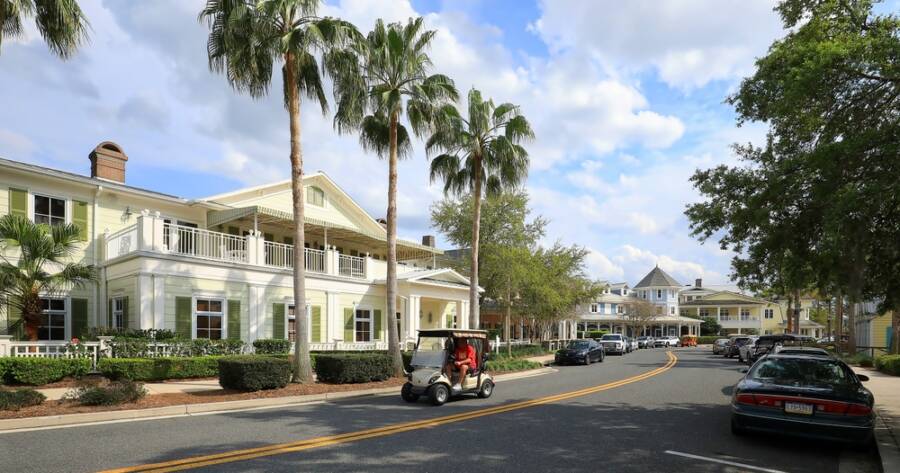
For many American seniors, the idea of retirement living conjures images of either bare-bones facilities or impossibly expensive estates. The present reality is far more nuanced — and far more appealing — particularly for those navigating what modern retirement villages have to offer.
What Makes a Retirement Village Different
A retirement village is more than a place to live — it is a carefully designed environment built around the needs, interests, and social rhythms of older adults. Unlike traditional housing, these communities are structured to bring together residents who share similar life stages, creating an organic sense of belonging that is difficult to replicate elsewhere. As one leading platform in the senior living space describes it, these communities are “built around the concept of residents living surrounded by peers with similar interests and life stages, fostering a strong sense of community” (source).
This philosophy shapes everything from the physical layout of a community to its programming calendar. Whether a retiree is looking to take up pickleball, join a painting class, or simply enjoy a quiet afternoon without household maintenance demands, retirement villages are designed to make that possible. The maintenance-free lifestyle component, in particular, ranks among the most frequently cited reasons seniors make the move.
The Spectrum of Retirement Living Options in the United States
One of the most important things prospective residents and their families should understand is that retirement living in the United States is not a single product — it is a wide spectrum. On one end sit active adult communities, sometimes called 55+ communities, which cater to independent, healthy seniors seeking social engagement and convenient amenities. On the other end are continuing care retirement communities (CCRCs), which provide a full range of support services under one roof.
CCRCs, in particular, have seen remarkable growth in recent years. The number of these communities has roughly doubled over the last decade, now exceeding 2,000 facilities across the country, driven by shifting demographics and an increasing number of Americans entering retirement age (source). These communities typically offer independent living, assisted living, skilled nursing, and memory care — all within the same campus — meaning residents can transition between care levels as their health needs evolve without relocating entirely (source).
Between these two poles lies a rich variety of options. Luxury retirement villages may feature resort-style dining, concierge services, and spa facilities. More affordable active adult neighborhoods offer updated homes, community centers, and organized activities at a fraction of the cost. Platforms dedicated to 55+ real estate now make it easier than ever to compare pricing, amenities, and locations across thousands of listings nationwide (source).
Affordable Luxury: A Realistic Possibility
Affordability in retirement housing depends on a household’s income and resources rather than a particular home price. HUD commonly defines housing affordability as spending no more than about 30% of monthly income on housing costs, including items such as mortgage payments, property taxes, insurance, rent, and utilities (source). For retirees, this means the purchase price or advertised rent is only the starting point when deciding whether a community is realistically affordable.
Specific 55+ communities illustrate how widely those costs can vary. At On Top of the World in Ocala, Florida, current homes are priced from the high $100,000s to the mid-$600,000s, while HOA dues range from $174 to $524 per month (source). Renting can avoid a large home purchase, but recurring costs still need to be compared carefully.
Continuing care retirement communities use a very different financial model and may require considerably more capital. Freedom Pointe at The Villages in Florida, for example, currently lists independent-living entrance fees beginning at $261,500 and monthly fees starting at $3,780 (source).
The monthly charge covers expenses including home maintenance, property taxes, utilities, dining, and fitness membership, while the entrance fee also provides access to future levels of care under the community’s contract structure. These figures show why “affordable” should not simply mean inexpensive: retirees need to compare the initial cost, HOA or recurring fees, healthcare needs, and other housing expenses with their expected retirement income and savings.
How Communities Are Evaluated and Ranked
For families doing due diligence, understanding how top retirement communities are assessed can be enormously helpful. Newsweek’s annual ranking of the best CCRCs in the United States draws on four distinct data sources: a national online survey, a visitor satisfaction score, an accreditation score, and aggregated reviews — with resident and visitor feedback collectively accounting for the majority of the overall evaluation (source). This multi-layered methodology provides a far more complete picture than any single metric alone.
Among the highest-performing communities identified in the 2025 rankings are HumanGood – Valle Verde in Santa Barbara, California, Willow Valley Communities in Pennsylvania, and Freedom Pointe at The Villages in Florida (source). Each of these communities earned its ranking through a combination of strong resident satisfaction, recognized accreditation, and consistent visitor feedback — a blend that underscores how seriously the top-tier operators take quality.
Beyond formal rankings, prospective residents are well-served by using dedicated real estate and community research platforms that allow side-by-side comparisons of communities across regions. These tools allow seniors and their families to filter by budget, location, care level, and available amenities, making the search process far more transparent and manageable (source).
Why Location Still Matters
Geography plays a significant role in both the character and the cost of retirement village living. States like Florida attract retirees with warm weather, no state income tax, and an enormous variety of community types at various price points. California offers coastal living and world-class healthcare infrastructure, though often at a higher baseline cost. Pennsylvania, meanwhile, represents a compelling mid-Atlantic option for those who prefer four seasons and proximity to major metropolitan healthcare systems.
Beyond state-level considerations, proximity to family, preferred climate, and access to medical specialists all factor into the decision. Many seniors find that relocating to a different state for retirement village living opens up options that simply would not exist in their current locale — including communities that deliver luxury-level amenities at significantly lower price points than comparable coastal markets.
Why You Should Learn More About Retirement Villages Today
Retirement villages across the United States have evolved into thoughtfully designed communities that blend comfort, care, and connection in ways that were once the exclusive domain of the very wealthy. Today, whether a senior is drawn to an active adult 55+ neighborhood or a full-service CCRC, there are more quality options available than at any previous point in American history.
Researching these communities carefully — comparing rankings, reading resident reviews, and examining care continuity options — puts seniors and their families in a strong position to make a decision that serves both present enjoyment and future wellbeing. The landscape of retirement living is rich, varied, and more accessible than many people realize.