

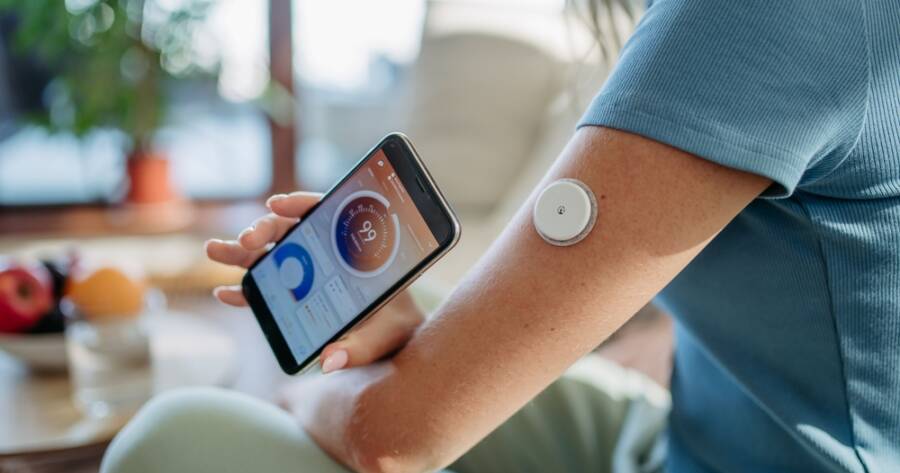
Managing diabetes has entered a new era, one shaped by intelligent devices, real-time data, and connected care systems that give patients far greater control over their health than previous generations ever had.
The Shift From Finger Pricks to Continuous Monitoring
For decades, people living with diabetes relied on periodic blood glucose readings taken through finger pricks — a process that offered only snapshots of glucose levels rather than a full picture of how levels moved throughout the day. That approach has been largely transformed by continuous glucose monitors, or CGMs, which track glucose in real time and alert users when levels drift outside safe ranges. These devices have nearly eliminated the need for routine finger pricks by delivering a steady stream of data rather than isolated measurements (source).
Beyond convenience, the continuous nature of these readings carries real clinical value. Healthcare providers and patients alike can study patterns across hours and days, making it easier to understand how meals, exercise, stress, and sleep influence glucose behavior. Peer-reviewed research published through the National Institutes of Health confirms that modern CGM systems produce highly accurate data that supports both everyday self-management and more informed clinical decisions (source). This kind of granular insight was simply not available with older monitoring tools.
Automated Insulin Delivery and the Artificial Pancreas
One of the most significant advances in diabetes care involves systems that do more than just measure — they respond. Automated insulin delivery platforms, often called closed-loop or artificial pancreas systems, link CGM data directly to insulin pump algorithms. Rather than waiting for a person to manually calculate and administer a dose, these systems adjust insulin delivery on their own, continuously recalibrating to keep glucose within a healthy range (source).
The practical effect of this automation is a meaningful reduction in both dangerous low-glucose episodes, known as hypoglycemia, and high-glucose spikes, known as hyperglycemia. Some CGM devices now work in direct coordination with insulin pumps to raise what clinicians call “time in range” — the proportion of each day that a person’s glucose levels stay within recommended targets (source). For many patients, this represents a profound shift from reactive crisis management to proactive, steady glucose control.
Smart Insulin Pens and Connected Data
Not everyone with diabetes uses an insulin pump, and newer smart insulin pens have brought technological advantages to those who rely on injections. These devices calculate the appropriate insulin dose by factoring in current blood glucose levels and carbohydrate intake. They also retain a log of recent doses and transmit that information wirelessly to a smartphone application, giving both patients and providers a more complete picture of daily insulin use (source).
This kind of connected data-sharing has become a defining feature of modern diabetes management. When device data flows seamlessly into digital platforms, care teams can review patterns remotely, spot potential problems before they escalate, and fine-tune treatment plans with greater precision. The convenience of automated logging also reduces the burden on patients who previously had to record doses manually, minimizing the risk of dosing errors caused by forgetting recent injections.
Telehealth and the Expanding Reach of Diabetes Care
Digital health platforms have expanded the ways patients and providers stay connected between office visits. Telehealth has allowed care teams to monitor patients remotely, review device-generated data, and engage in more frequent conversations about treatment adjustments — all without requiring an in-person appointment for every interaction (source). For patients in rural communities or those with limited mobility, this access can be genuinely transformative.
The measurable health impact of these digital tools reinforces their value. Research has linked digital diabetes technologies to improvements in HbA1c levels — a key indicator of long-term blood sugar control — along with increased time spent within target glucose ranges (source). These are not marginal gains; for people managing a complex chronic condition every day, improvements in these metrics translate directly to better quality of life and reduced risk of long-term complications.
Navigating Insurance and Device Access
While the technology continues to advance, access remains a practical concern for many patients. Insurance coverage for diabetes devices varies considerably across providers. Factors such as medical necessity documentation, the specific model in question, device cost, and whether a physician has formally prescribed the device all influence whether coverage is approved (source). Patients are encouraged to work closely with their healthcare providers to document clinical need and explore appeals processes when initial coverage requests are denied.
Understanding the coverage landscape is an important step for anyone considering a CGM, smart pen, or automated insulin delivery system. Providers, certified diabetes educators, and patient advocacy organizations can all serve as resources when navigating these decisions. The right device is one that fits both the clinical picture and the practical realities of a person’s daily life.
Why You Should Learn More About Diabetes Technology
The landscape of diabetes management has changed substantially, and that evolution shows no signs of slowing. Continuous glucose monitors, automated insulin delivery systems, smart pens, and telehealth platforms have collectively shifted diabetes care from periodic intervention toward continuous, data-driven oversight. Patients who stay informed about available technologies are better positioned to have productive conversations with their care teams and make choices aligned with their personal health goals.
Whether someone has lived with diabetes for years or is newly diagnosed, understanding how modern devices work — and how to access them — is a meaningful step toward better long-term outcomes. Healthcare providers, certified educators, and reputable patient organizations remain essential partners in that ongoing process.