

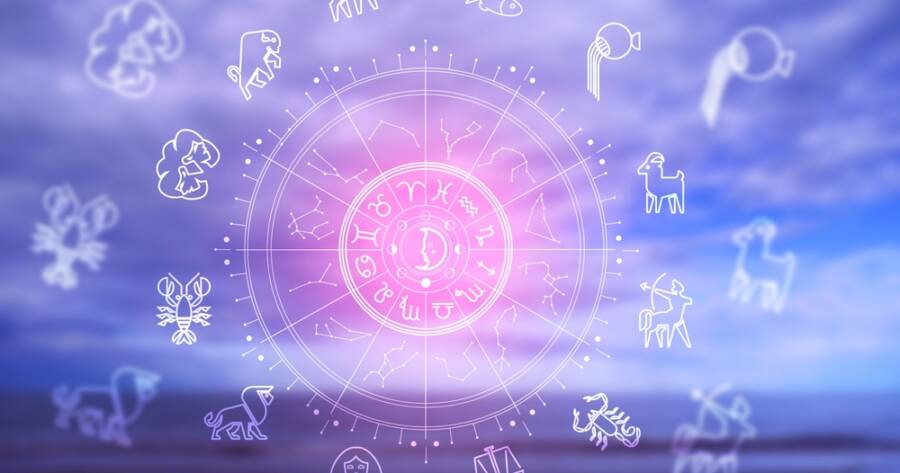
Astrology blends ancient tradition with a modern interest in personality, timing, and self-reflection. In 2026, zodiac chart reading can help people interpret planetary placements, houses, aspects, and sign characteristics while considering current astrological forecasts. A birth chart offers a personalized framework for understanding how astrologers connect celestial patterns with individual traits, relationships, and life themes.
The Ancient Roots of Astrology and the Zodiac
Long before modern psychology offered frameworks for human behavior, ancient civilizations were already mapping the sky in search of meaning. The Babylonians are widely credited with laying the foundation for what people practice today, having carefully constructed tables to record celestial movements and believed to have originated the 12 zodiac signs as a system (source). That early work eventually spread across cultures, influencing Greek, Roman, and later Western traditions of astrological thought.
One of the most significant developments came from the Greek scholar Ptolemy, who is credited with creating the concept of “houses” in astrology, which are divisions of a birth chart that correspond to different spheres of life, such as career, health, and relationships (source). This innovation transformed astrology from a general sky-watching practice into a deeply personal tool, giving each individual chart a unique structure based on the exact time and place of birth.
What the 12 Zodiac Signs Represent
The 12 zodiac signs each carry a distinct set of characteristics, shaped not only by their individual symbolism but also by the elemental group they belong to. Astrology recognizes four elements — fire, earth, air, and water — with each element containing three signs that share a common energy while expressing it in different ways (source). Fire signs tend toward passion and action, earth signs toward practicality and stability, air signs toward intellect and communication, and water signs toward emotion and intuition.
Beyond elements, every sign also belongs to one of three categories known as modalities or qualities. Cardinal signs are associated with initiating change, fixed signs with sustaining and maintaining, and mutable signs with transformation and adaptability (source). Understanding where a person’s sun sign, moon sign, and rising sign fall within these groupings adds significant depth to any astrological reading.
Reading a Natal Chart: Planets, Houses, and Aspects
A natal chart, also known as a birth chart, is a snapshot of the sky at the precise moment of a person’s birth. It maps the positions of the planets by sign and house, then identifies the angular relationships between those planets, which astrologers refer to as aspects (source). Each of these layers contributes something different to the overall picture of a person’s tendencies, strengths, and challenges.
Aspects are especially revealing. Configurations such as conjunctions, squares, trines, and oppositions between planetary bodies, for example, a Sun square Moon or a Venus trine Pluto, are interpreted to shed light on core personality dynamics and internal tensions (source). For those newer to astrology, free birth chart tools can calculate these positions automatically, making the process of zodiac chart reading more accessible than ever before (source).
More advanced natal chart work goes even further, incorporating factors like lunar phases, retrograde planets, midpoints, hemisphere emphasis, and house rulerships (source). Each additional layer refines the interpretation, turning a general personality sketch into a nuanced map of someone’s psychological landscape and life path.
2026 Astrology Forecasts: What Each Sign Can Expect
Annual horoscope forecasting extends the natal chart into real time, tracking how current planetary transits interact with each sign’s unique chart placements. The AstroTwins — Ophira and Tali Edut, resident astrologers at ELLE Magazine — publish detailed yearly forecasts covering love, money, and personal growth for all 12 signs, and their 2026 outlook offers specific insights for each (source).
For Aries, 2026 is characterized as a “chrysalis year,” a period less about racing forward and more about deliberately building a life that fits rather than simply chasing speed (source). This represents a meaningful shift for a sign traditionally associated with bold, impulsive momentum. Libra, by contrast, is forecast for a breakout period in career and community involvement, with creative projects gaining wider audiences and platforms expanding their reach (source).
Pisces enters 2026 with a combination of creative energy and a newly grounded discipline, with the forecast suggesting that visionary ideas can be anchored into sustainable practices — and even turned into sources of income (source). These sign-by-sign outlooks reflect the broader utility of astrology: not as a fixed destiny, but as a seasonal framework for timing decisions and setting intentions.
How Astrology Functions as a Tool for Self-Understanding
One of the most enduring appeals of astrology is its capacity to hold complexity. A single birth chart contains multitudes — planetary placements that may seem contradictory on the surface but, when read together, paint a coherent portrait of a person’s inner world. Studying the positions of the planets and points by sign, house, and aspect can open pathways to genuine self-awareness (source).
That depth is part of why astrology continues to attract serious practitioners alongside curious newcomers. The AstroTwins publish day-by-day planetary transit breakdowns for all 12 signs, demonstrating how astrology functions not just as a personality system but as a calendar-based practice for navigating the rhythms of any given year (source). When someone understands both their natal chart and the current planetary weather, they hold two complementary lenses through which to make sense of their experiences.
Why You Should Learn More About Astrology Today
Astrology’s staying power lies in its ability to connect the personal with the cosmic, offering a structured yet flexible framework that speaks to both ancient tradition and modern self-reflection. From the Babylonian origins of the zodiac to Ptolemy’s development of astrological houses, the system has evolved over millennia into the nuanced practice known today.
Whether someone is pulling up their first natal chart or studying 2026 planetary transits sign by sign, the zodiac offers a language for understanding human experience that continues to resonate across generations. Exploring these tools, from elemental groupings and modalities to aspects, house placements, and annual forecasts, equips anyone with a richer vocabulary for interpreting their own nature and navigating the year ahead.