

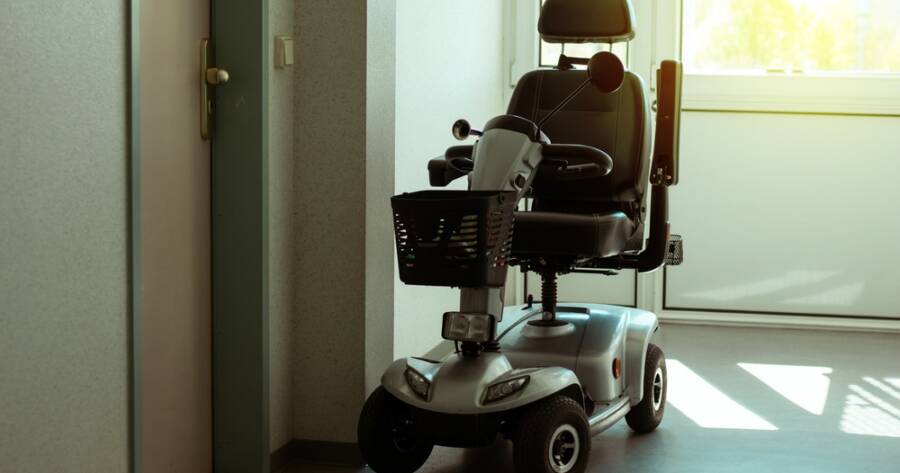
A mobility scooter can make everyday movement easier for people who struggle to get around safely at home, but paying for one can raise plenty of questions. Medicare may help cover certain power scooters when specific requirements are met. Knowing what affects eligibility, approval, and out-of-pocket costs can make the process easier to navigate from the start.
What Medicare Part B Covers for Mobility Scooters
Mobility scooters, also known as power-operated vehicles, fall under Medicare Part B as Durable Medical Equipment (DME) (source). This classification means they are treated similarly to other medically necessary equipment, such as hospital beds or oxygen supplies, that beneficiaries use in their homes. However, coverage is not automatic — Medicare applies a specific set of eligibility criteria before approving a scooter for a beneficiary.
The foundation of Medicare’s approach is medical necessity. A scooter must be deemed medically necessary for a beneficiary to qualify for coverage, meaning the device must be required due to a health condition that limits the person’s ability to move around their home (source). This is an important distinction: the need must be related to functioning within the home, not simply for convenience or outdoor mobility.
The Role of a Doctor’s Examination and Prescription
Before Medicare approves coverage for a power scooter, the beneficiary must complete a face-to-face examination with a treating provider (source). This visit allows the physician or qualified healthcare professional to assess the patient’s mobility limitations and determine whether a power-operated vehicle is the most appropriate solution.
Following that examination, a written prescription is required. This documentation forms the backbone of the coverage request and must be submitted to Medicare through the DME supplier. The supplier then works on behalf of the beneficiary to submit all necessary paperwork to confirm that eligibility requirements are satisfied (source). Without proper documentation from both the treating provider and the supplier, the claim may be denied.
Prior Authorization: An Important Step for Some Devices
Certain power mobility devices, including some categories of scooters, require prior authorization before Medicare will approve the cost (source). Prior authorization means that Medicare reviews submitted information before the equipment is provided to the beneficiary, rather than reviewing the claim after the fact.
This step exists to ensure that the equipment is appropriate and that all coverage conditions are met upfront. Beneficiaries should work closely with their prescribing provider and DME supplier to determine whether their specific scooter requires prior authorization. Skipping this step when it is required can result in denied coverage and significant out-of-pocket expense.
Understanding Cost-Sharing Under Medicare Part B
Even when Medicare covers a mobility scooter, beneficiaries are still responsible for a portion of the cost. After the annual Part B deductible is met, the beneficiary pays 20% of the Medicare-approved amount for the device, provided the supplier accepts assignment (source). Accepting assignment means the supplier agrees to the Medicare-approved rate as full payment, which protects the beneficiary from additional charges beyond their 20% share.
If a supplier does not accept assignment, the beneficiary may face higher out-of-pocket costs. Choosing a Medicare-enrolled DME supplier who accepts assignment is therefore a practical decision that directly affects what the beneficiary ultimately pays. Those who have supplemental insurance, sometimes called Medigap, may find that their secondary coverage helps offset the remaining 20%.
How to Choose a Qualifying DME Supplier
Not every scooter retailer qualifies as a Medicare-enrolled DME supplier. Beneficiaries need to work with a supplier that is enrolled in Medicare and meets all program requirements. The supplier plays an active role in the coverage process by submitting documentation on behalf of the beneficiary and confirming that the equipment meets Medicare’s standards (source).
Selecting the right supplier early in the process can prevent delays and complications. Beneficiaries should verify a supplier’s Medicare enrollment status before proceeding. Additionally, keeping thorough records of all documentation, including the physician’s prescription, examination notes, and any prior authorization approvals, helps create a clear paper trail if questions arise during the claims process.
Why You Should Learn More About Medicare Coverage for Mobility Scooters
Navigating Medicare’s requirements for mobility scooter coverage involves multiple steps, from medical examinations and written prescriptions to prior authorization and cost-sharing responsibilities. Each stage of the process matters, and missing a single requirement can delay or deny access to a device that significantly improves daily living.
Beneficiaries who take time to understand the rules surrounding DME coverage under Part B are far better positioned to receive the equipment they need without unnecessary financial strain. Speaking with a treating provider and a qualified Medicare-enrolled DME supplier are both practical starting points for anyone exploring this type of coverage.