

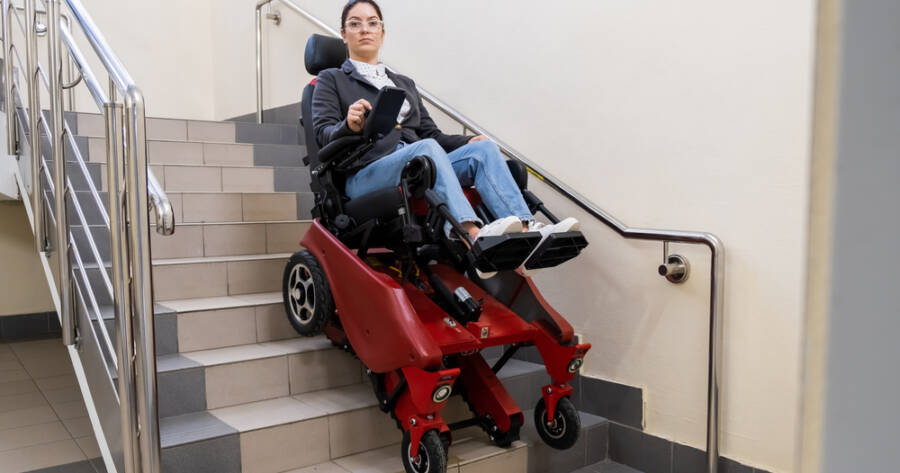
For anyone navigating stairs with limited mobility, the latest generation of portable stairlifts is changing what independence looks like at home and beyond — no permanent installation required, no contractors needed, and no compromise on safety or convenience.
What Makes Portable Stairlifts Different in 2026
Traditional stairlifts have long been the go-to solution for people who struggle with stairs, but they come with significant drawbacks. Permanently bolted rails alter a home’s structure, the installation process can take days, and the equipment stays behind when someone moves or travels. For renters, frequent travelers, or anyone who visits multiple locations, those limitations have historically made stairlifts an impractical choice.
Portable stairlifts solve each of those problems by removing the need for pre-installed tracks entirely. These devices arrive ready to operate straight out of the box, require no modifications to walls or staircases, and can be relocated as easily as any piece of luggage (source). That shift alone represents a fundamental rethinking of what a stairlift can be.
How Portable Stairlifts Actually Work
Rather than relying on a fixed rail system mounted to a wall or staircase, modern portable stairlifts use battery-powered motors and self-guiding mechanisms that grip the stair treads directly. The device moves with the user up or down the staircase without needing any permanent anchor point. Because the power comes from an onboard rechargeable battery, there are no cords running along the wall and no dependence on nearby electrical outlets.
The LITE Mobile Stairlift, for example, is a lightweight device that operates without pre-installed tracks and can handle up to 250 pounds, managing as many as 60 flights of stairs on a single charge (source). For users who need more capacity, heavier-duty options exist as well. The Helix Mobile Stairlift is specifically engineered for curved and circular staircases, also requiring no pre-installed tracks while supporting up to 400 pounds (source). This range of models means that portable stairlifts are no longer a one-size-fits-all compromise — they are purpose-built for different staircase types and user needs.
The Practical Advantages of Going Portable
One of the most compelling benefits of portable stairlifts is their ability to move wherever the user goes. These devices are foldable for compact storage and function equally well indoors and outdoors, from private homes to apartment complexes and public parks (source). That means a single device can handle the stairs at a primary residence, a family member’s home, or a vacation destination — all without purchasing or installing a separate unit at each location.
Portable models are also sized to fit in a standard car trunk, making them genuinely practical for on-the-go use rather than just theoretically portable (source). Traditional stairlifts, by contrast, cannot be transferred when a user travels or relocates, making them a fixed investment tied to a single address (source).
Cost Considerations Compared to Traditional Models
Cost is another area where portable stairlifts offer a meaningful advantage. Permanently installed models carry a price range that can extend well into the thousands — and that figure does not always include professional installation, which adds both time and expense. Portable stairlifts come in at a fraction of that cost and are ready to operate without any additional labor fees (source).
Real users have taken note of this value equation. One owner observed that “the price and flexibility of this chair was much better than installing something permanent on 2 flights of stairs plus a landing” (source). That sentiment reflects a growing recognition that permanent installations are not always the most practical or economical path forward — especially for households with multiple staircases or those anticipating a future move.
Who Benefits Most From a Portable Stairlift
Portable stairlifts serve a broad range of people. Older adults who wish to age in place without committing to permanent home modifications are an obvious fit, but so are individuals recovering from surgery or injury who need temporary stair assistance. Renters who cannot make structural changes to their homes also benefit significantly, as do caregivers who support loved ones across different households.
Multi-story homes present another compelling use case. A single portable stairlift can serve two or more staircases in the same residence by simply being relocated between them, eliminating the need to purchase and install a permanent unit on every floor. The combination of foldable design, battery operation, and no-installation setup makes this kind of flexibility not just possible but practical for everyday life.
Why You Should Learn More About Portable Stairlifts Today
Portable stairlifts represent a meaningful evolution in mobility assistance, offering independence without the permanence, expense, or logistical burden that traditional stairlift installations require. With models designed for straight staircases, curved staircases, indoor environments, and outdoor settings alike, the options available in 2026 cover a wider range of real-world situations than ever before. Whether the need is temporary or long-term, single-location or multi-location, the portable category has matured into a reliable, cost-effective alternative worth serious consideration. Anyone evaluating mobility solutions for themselves or a loved one will find that understanding the full scope of portable stairlift options is a valuable step toward making a well-informed decision.